The Role of Batteries in Electric Vehicles
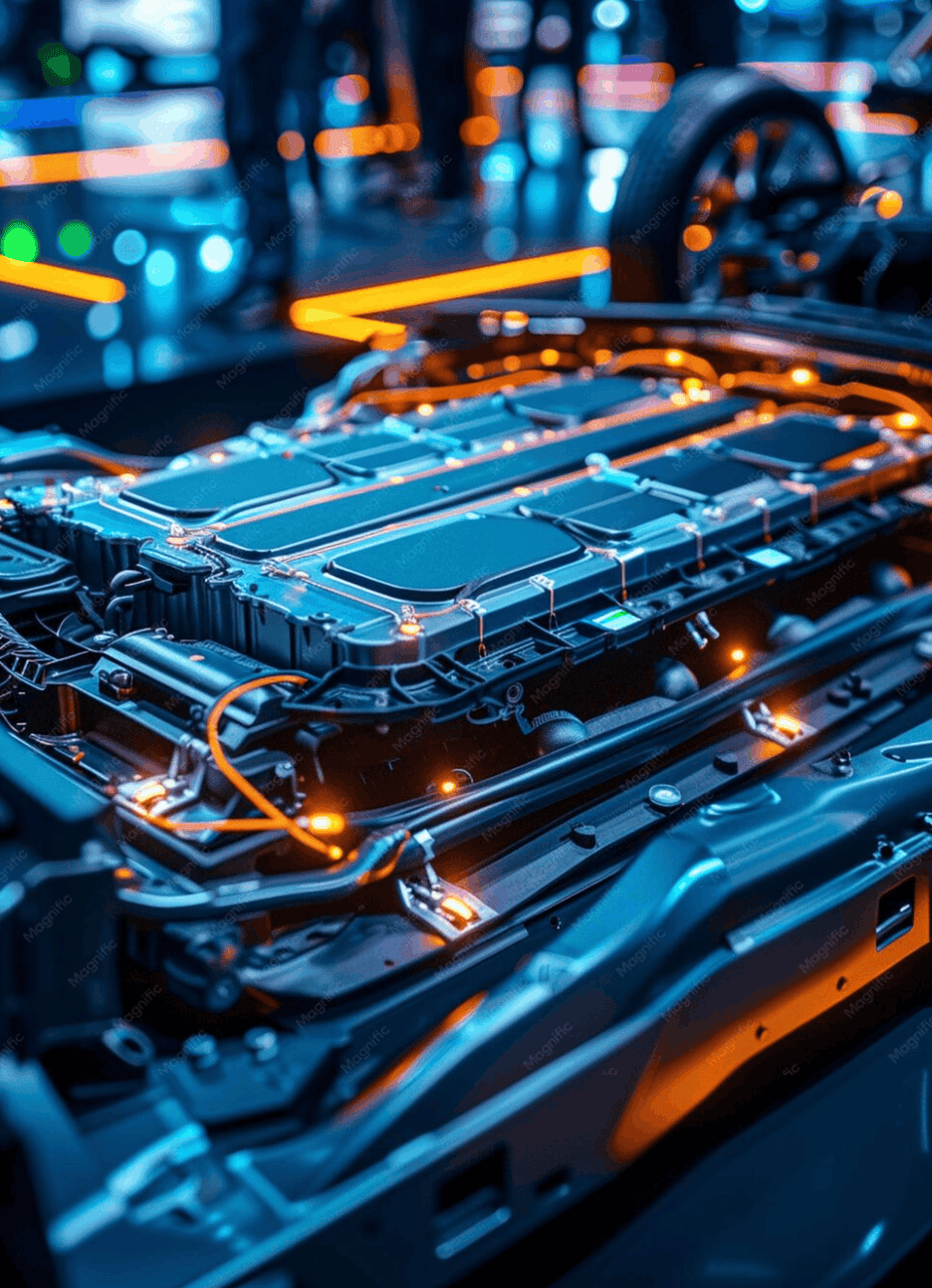
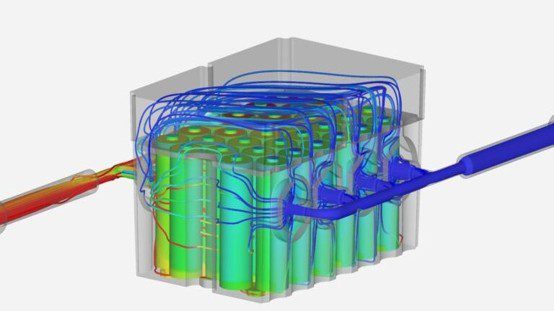
The battery is the core energy source of an electric vehicle (EV), storing the electrical energy required for propulsion and directly influencing range, charging speed, efficiency, performance, and lifetime. In order to achieve the intended goals for the next-generation EVs, battery systems play a crucial role and different aspects related to battery systems should be improved, including the energy and power density, thermal management, safety, and sustainability through advanced system architectures combining cells, battery management systems (BMS), and electrical integration [1], [4].
The Shift Towards Higher-Voltage Architectures
High-voltage electrical architecture appears to be a promising solution for next-generation electric vehicles. Moving from conventional 400 V systems towards 800 V and beyond reduces the current required to deliver the same power output. Since electrical losses increase with the square of current, reducing current improves efficiency, lowers heat generation, and reduces thermal stress on electrical components. Higher-voltage systems also enable faster charging and improved power density but require coordinated development of the complete vehicle electrical architecture, including batteries, power electronics, charging systems, insulation, and safety components [2], [6].
ODYSSEV’s Flexible High-Voltage Battery Architecture
Within the ODYSSEV project, a flexible battery architecture is being developed using modular 400 V battery units that can be combined into different voltage configurations depending on operating requirements. The system enables 400 V and 800 V operation during charging and 1200 V operation during vehicle traction.
The 800 V charging configuration supports compatibility with high-power DC charging systems up to 350 kW, targeting charging from 20% to 80% state of charge in only 10 minutes. While driving, the 1200 V configuration reduces current demand for a given power output, improving efficiency and reducing electrical losses.
Modular Design for Improved Lifecycle Management
Beyond electrical performance, modular battery architecture provides advantages in maintenance, diagnostics, and sustainability. Conventional EV battery packs are often highly integrated, meaning that a fault in one area may require replacement of a larger assembly. By dividing the battery into independent units, ODYSSEV enables targeted replacement of damaged sections instead of replacing the complete battery system.
This modular approach improves serviceability, reduces material waste, and supports longer battery lifetimes by enabling more efficient maintenance and lifecycle management [3], [5].
Intelligent Battery Management and Active Balancing
An EV battery pack contains many individual cells that must operate together safely and efficiently. Differences between cells can develop due to manufacturing variations, temperature gradients, and ageing behaviour. The battery management system (BMS) monitors parameters such as voltage, current, and temperature while estimating key indicators including state of charge (SOC) and state of health (SOH) [1], [4].
Within ODYSSEV, a two-stage active balancing strategy is being explored at both the cell and pack levels. Unlike passive balancing, which dissipates excess energy as heat, active balancing transfers energy between cells or modules, improving energy utilisation, reducing imbalance, and supporting longer battery lifetime.
The Future of EV Battery Systems
The next generation of EV batteries will depend not only on higher energy capacity but also on smarter, more adaptable, and more sustainable architectures. Through its flexible high-voltage modular battery concept, ODYSSEV demonstrates how advanced voltage configurations, intelligent management, and lifecycle-oriented design can work together to enable faster charging, improved efficiency, and longer-lasting electric mobility solutions.
References
[1] M. K. Hasan, M. Mahmud, A. K. M. A. Habib, S. Motakabber, and S. Islam,
“Review of Electric Vehicle Energy Storage and Management System: Standards, Issues, and Challenges,” 2021, Journal of Energy Storage, vol. 41, Article 102940.
Link: https://www.researchgate.net/publication/353382457_Review_of_electric_vehicle_energy_storage_and_management_system_Standards_issues_and_challenges
[2] H.-C. Kuo, T. Chang-Chung, C.L. Hung, S. Elangovan, “Industry Perspective on Power Electronics for Electric Vehicles,” 2024, Nature Reviews Electrical Engineering, vol. 1, pp. 435–452.
Link: https://www.researchgate.net/publication/381242548_Industry_perspective_on_power_electronics_for_electric_vehicles
[3] F. Hashemniya, A. Balachandran, E. Frisk, and M. Krysander, “Structural Diagnosability Analysis of Switched and Modular Battery Packs,” 2023.
Link: https://www.diva-portal.org/smash/get/diva2:1996023/FULLTEXT01.pdf
[4] A. K. M. A. Habib et al., “Lithium-Ion Battery Management System for Electric Vehicles: Constraints, Challenges, and Recommendations,” 2023, Batteries, vol. 9, no. 3, Article 152.
Link: https://www.researchgate.net/publication/368900512_Lithium-Ion_Battery_Management_System_for_Electric_Vehicles_Constraints_Challenges_and_Recommendations
[5] European Parliament and Council, “Regulation (EU) 2023/1542 Concerning Batteries and Waste Batteries,” 2023.
Link: https://eur-lex.europa.eu/eli/reg/2023/1542/oj
[6] A. Emadi, Y. J. Lee, and K. Rajashekara, “Power Electronics and Motor Drives in Electric, Hybrid Electric, and Plug-In Hybrid Electric Vehicles,” 2008, IEEE Transactions on Industrial Electronics, vol. 55, no. 6, pp. 2237–2245.
Link: https://www.researchgate.net/publication/3219962_Power_Electronics_and_Motor_Drives_in_Electric_Hybrid_Electric_and_Plug-In_Hybrid_Electric_Vehicles
[7] International Energy Agency (IEA), Global EV Outlook 2025, 2025.
Link: https://www.iea.org/reports/global-ev-outlook-2025