ODYSSEV Kick-off Meeting With a nearly €6 million budget, ODYSSEV will develop the next generation of high-voltage electric vehicles....
Archive for month: February, 2026
Recent Posts
Recent Comments
No comments to show.

ODYSSEV Kick-off Meeting With a nearly €6 million budget, ODYSSEV will develop the next generation of high-voltage electric vehicles....
Funded by the European Union under GA no. 101192612. Views and opinions expressed are however those of the author(s) only and do not necessarily reflect those of the European Union or CINEA. Neither the European Union nor the granting authority can be held responsible for them.
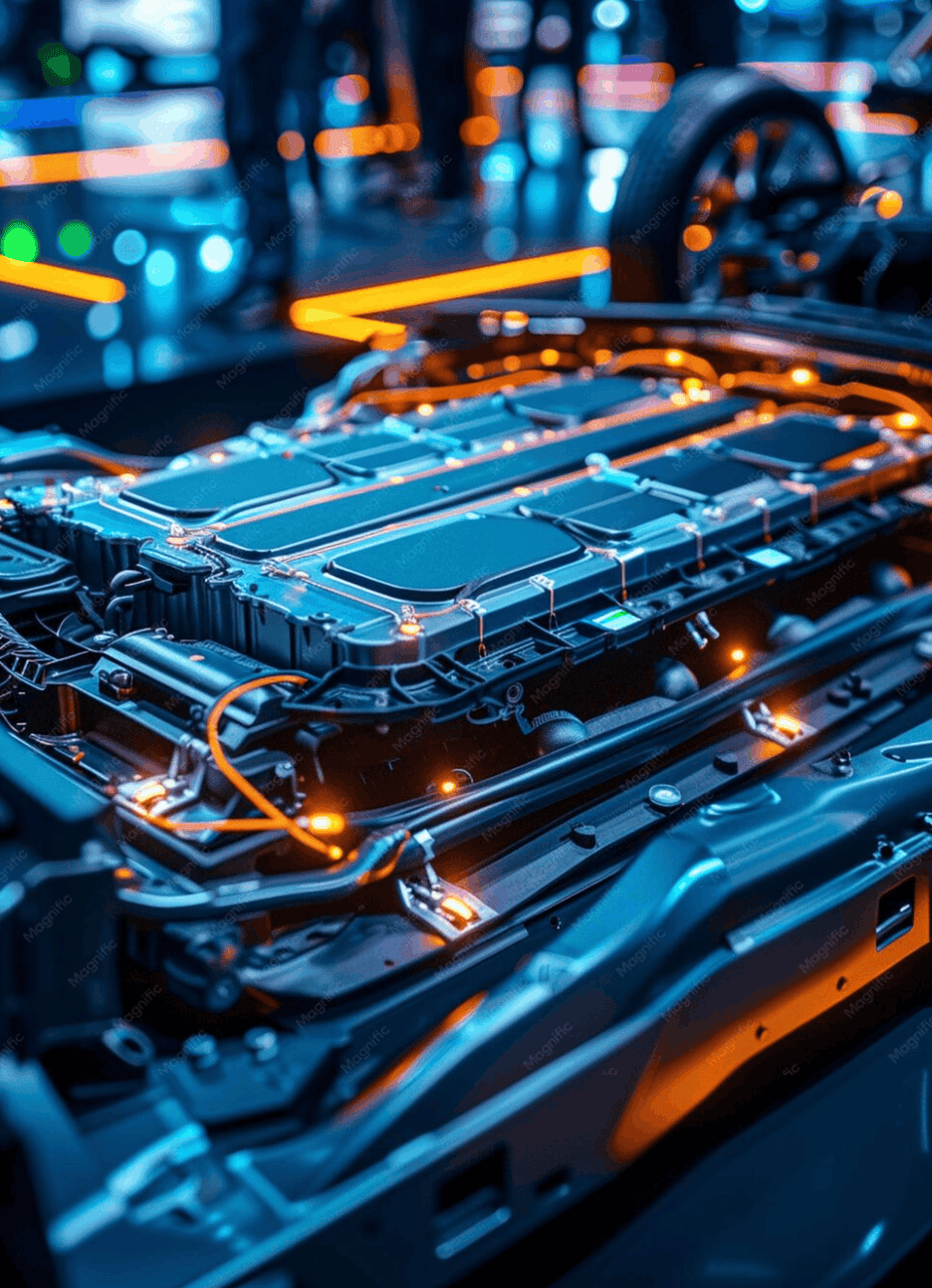
The battery is the heart of an electric vehicle, bearing the electric energy required to propel the vehicle.
Our battery system is built upon 400V modules combined into a modular, scalable pack architecture that supports operation at 400V, 800V (in charging mode) and 1200V (in traction mode).
In charging mode, the 800 V architecture allows compatibility with direct current (DC) fast-chargers of up to 350 kW, with our design targeting a charging time of 20% to 80% state of charge within around 10 minutes. As a result, charging times are drastically reduced, compared to the typical 400 V architectures.
In traction mode, the nominal voltage of the ODYSSEV powertrain is 1200 V, allowing for lower losses due to lower currents. Traction power targets a maximum of 100 kW.
The modular pack design also means a faulty pack can be replaced individually rather than swapping the whole battery.
The On-Board Charger (OBC) allows for charging the vehicle from alternating current (AC) from local or home installations. Typical outputs range from 3-10 kW for smaller EVs with batteries of around 30-40 kWh, while 10-22 kW chargers are appropriate for mid-sized electric vehicles with battery capacities ranging from 40-70 kWh.
Our OBC targets 22 kW charging, consisting of parallelizable power modules based on commercial wide-bandgap semiconductors, thus reducing power loses and allowing high power densities. Our OBC uses modular architecture with one isolated AC/DC converter module per 400V battery pack, so each pack can charge independently. It supports both single-phase and three-phase European AC grids (230/400V, 50Hz).
A hybrid power electronics approach combines silicon IGBTs and Silicon Carbide MOSFETs through an Adjustable Hybrid Cross-Switch (AHXS) concept, targeting a three-phase traction inverter able to deliver traction power over 100kW. This architecture dynamically adjusts the Si-to-SiC ratio depending on load conditions, enabling improved flexibility and cost-efficient operation for 1200V powertrains.
ODYSSEV places emphasis on the joint performance of the inverter and motor. In this direction, the inverter reduces the effects of high voltage harmonics, decreasing partial discharge, thereby improving the reliability and efficiency of the system. The AHXS concept reduces system cost while maintaining high efficiency and allows software-defined reconfiguration of hardware operation to optimise performance and manufacturing flexibility.
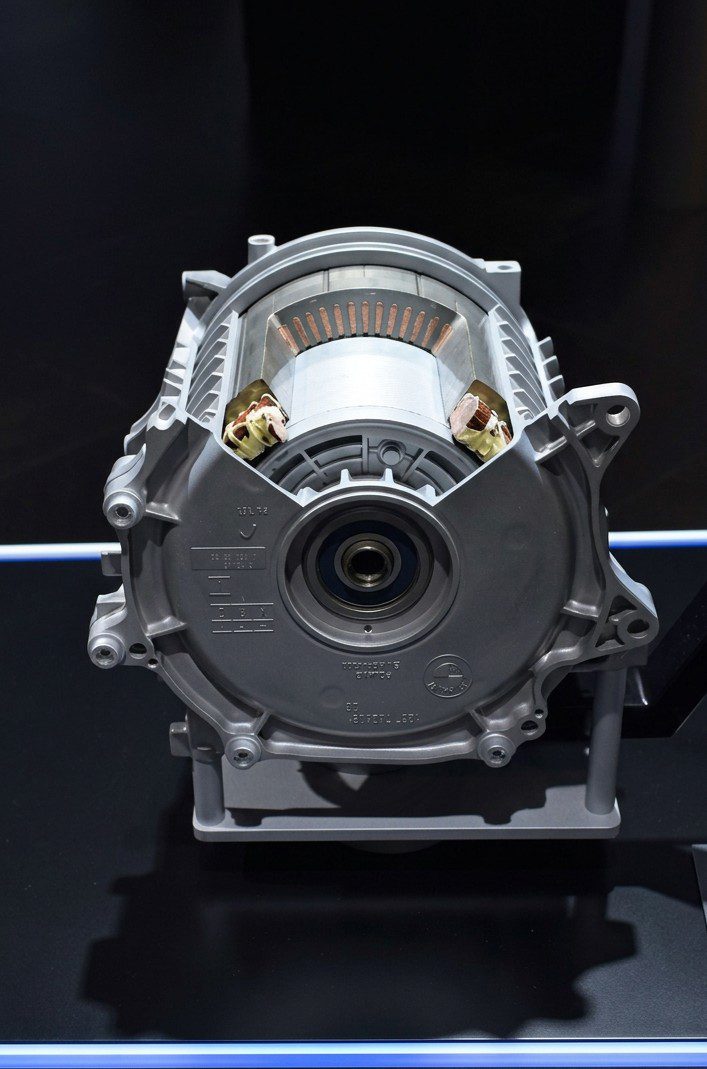
A high-voltage, high-efficiency electric motor is designed for operating at DC link voltages up to 1200V. ODYSSEV develops digital and AI-assisted tools to optimise the motor topology, considering not only the electric machine specifications, but incorporating system constraints and driveability aspects into a multi-physics optimisation framework, translating requirements to motor design rules.
The partial discharge risk is assessed through electric field modelling between adjacent coils and between windings and the stator/rotor core. An improved winding design targets an insulation lifetime exceeding 150,000 hours. Preliminary targets point to a single traction motor delivering peak power over 100kW, integrated into ODYSSEV's demonstrator vehicle.
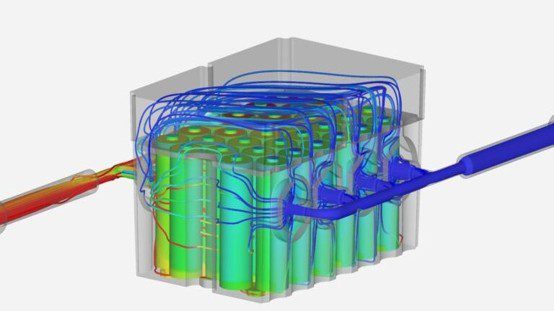
Advanced computational fluid dynamics (CFD) tools are used to simulate and optimise cooling strategies prior to prototype manufacturing. Simulations account for material thermal properties and operating conditions, to predict heat generation and dissipation within powertrain components.
CFD draws data also from the cloud-based virtual development environment, supports thermal management and the system packaging design of the electric powertrain. As a result, the thermal behaviour of the powertrain can be predicted, and the design can be optimised on a model-based scenario, shortening development cycles of the powertrain.
ODYSSEV aims to utilise data from multiple laboratories and test facilities to account for performance evaluation in multiple aspects (power output, efficiency, thermal behaviour, mechanical stress, etc.). In this direction, ODYSSEV develops an online platform based on a cloud, where multiple labs can access and exchange data real-time.
This secure and scalable cloud infrastructure also enables the integration of engineering tools such as MATLAB/Simulink for simulation and control algorithm development, allowing for a software-based evaluation of the whole powertrain. A dedicated logic board enables remote connectivity across all project partners through cloud-based interfaces. The infrastructure supports collaborative, multi-site development and iterative design workflows, integrating machine learning algorithms to predict thermal behaviour and optimise energy management strategies, thereby reducing development cycles and enabling rapid prototyping.
ODYSSEV will demonstrate the novel concept of its 1200 V powertrain, by integrating the powertrain in a C segment vehicle that was previously combustion-powered. The powertrain will be integrated into the same space as the original combustion-powered vehicle, after removing the combustion engine and some mechanical parts. The vehicle performance will be evaluated on a track and tested under real driving conditions. Hence, ODYSSEV will provide real evidence on the lower costs, losses and weight that high voltage solutions can offer for electric vehicles.
Our powertrain targets 20% higher driving range, a 30% reduction of time required for integration tests, and a 25% reduction in prototype-level costs. Endurance and stress testing confirm system interoperability and provide performance KPIs related to efficiency, safety, thermal robustness and driving range.